

Why Cedar and Yemeni Wood Are the Best Choices for Arabic Majlis Sofas | Benefits, Durability & Expert Insights for American Buyers in 2026


When investing in an authentic Arabic Majlis sofa for your American home — whether in humid Florida, sunny California, dusty Arizona, or cold Michigan winters — the wood used in the frame is one of the most critical decisions you’ll make. Cheap pine or particle board frames warp, crack, and fail in just a few years, while premium cedar and Yemeni hardwoods deliver heirloom durability that lasts generations.
In 2026, discerning buyers across the USA are choosing Diwan Zane’s handcrafted Majlis sofas specifically for our exclusive use of solid cedar and Yemeni wood. These natural materials not only provide superior strength and longevity but also add timeless beauty, natural resistance to pests and moisture, and that signature aromatic warmth that elevates any living space.
This comprehensive guide explores everything you need to know about cedar and Yemeni wood in Arabic sofas — from scientific benefits to real-world performance in American climates.
Ready to experience the difference? Explore our premium Cedar Jalsah Majlis collection.
Cedar and Yemeni woods have been prized for centuries in Middle Eastern furniture making, particularly for Majlis frames that must support heavy daily use while maintaining structural integrity. Cedar (often Lebanese or Turkish varieties) is renowned for its natural oils that repel insects and resist rot, while Yemeni hardwoods offer exceptional density and grain patterns that prevent warping even in varying humidity.
At Diwan Zane, we source only sustainably harvested, kiln-dried cedar and Yemeni wood to ensure every frame in our Yemeni Wood Majlis and Cedar Jalsah Majlis collections meets the highest standards — no fillers, no composites, just pure solid wood craftsmanship.
Key Benefits of Cedar Wood in Arabic Majlis Sofas
Cedar stands out as the gold standard for luxury Majlis frames due to several unique properties:
Natural pest resistance comes from aromatic oils (thujone and cedrol) that naturally deter termites, moths, and other insects — crucial for homes in southern states where pests thrive. Superior moisture control helps cedar absorb and release humidity without swelling or shrinking, preventing cracks in dry winters or humid summers. Antibacterial and aromatic qualities make cedar naturally antimicrobial while releasing a pleasant scent that freshens your living room for years. Exceptional longevity sees properly cared-for cedar frames lasting 50–100+ years, far outpacing softer woods.
These benefits explain why cedar dominates our premium Cedar Jalsah Majlis line — customers in Arizona and Texas report zero pest issues even after decades.
Why Yemeni Wood Excels for Structural Strength and Beauty
Yemeni hardwoods (including varieties like sidr and tamarisk) are legendary for their extreme density — often 20–30% harder than oak — making them perfect for load-bearing Majlis frames that support dozens of guests.
Unmatched durability resists scratches, dents, and wear from daily family use. Stunning grain patterns feature rich colors and unique figuring that deepen beautifully over time. Thermal stability performs exceptionally in temperature swings common across American seasons. Sustainable sourcing from managed Yemeni groves ensures ethical production without compromising quality.
Our Yemeni Wood Majlis collection showcases these woods at their finest, with intricate carvings that become family heirlooms.
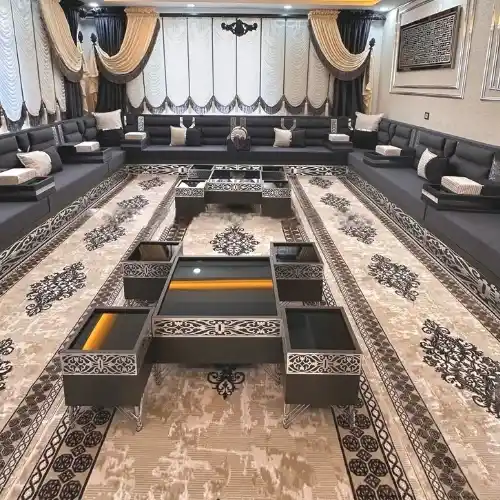
Cedar & Yemeni Wood vs Common Alternatives: A Real-World Comparison
| Material | Durability (Years) | Pest Resistance | Moisture Control | Weight/Strength | Cost | Best For |
|---|---|---|---|---|---|---|
| Cedar (DiwanZane) | 50–100+ | Excellent (Natural oils) | Outstanding | Medium/High | Premium | Luxury heirlooms |
| Yemeni Hardwood | 60–120+ | Very Good | Excellent | High | Premium | Heavy-use frames |
| Pine (Common imports) | 5–15 | Poor | Fair | Light/Low | Budget | Temporary furniture |
| Oak | 30–60 | Good | Good | High | High | Modern styles |
| Teak | 40–80 | Excellent | Excellent | High | Very High | Outdoor |
Cedar and Yemeni wood clearly outperform cheaper alternatives in longevity and performance — especially important for high-ticket Majlis investments.
Potential Drawbacks and How Diwan Zane Addresses Them
While premium, cedar can be softer than some hardwoods (we reinforce high-stress areas with Yemeni accents). Initial aromatic scent may be strong (fades naturally to pleasant levels). Higher upfront cost (offset by decades of use without replacement).
Diwan Zane mitigates these through expert kiln-drying, precision joinery, and 10-year structural warranties.
Maintenance Tips for Cedar and Yemeni Wood Frames
Dust weekly with a soft cloth → Apply natural cedar oil every 6–12 months (included free with purchase) → Avoid direct sunlight with UV curtains → Keep away from extreme heat sources → Professional polishing every 5 years
Follow our detailed care guide for lifelong beauty.
Real Stories from Diwan Zane Customers Across America
Families in Florida praise cedar’s mold resistance during humid summers. Texas owners love Yemeni wood’s heat tolerance without cracking. Michigan customers appreciate how these woods handle dry winters without splitting.

Invest in Wood That Lasts a Lifetime
Cedar and Yemeni wood aren’t just materials — they’re the foundation of true heirloom Arabic Majlis sofas that grow more beautiful with age. In 2026, choose Diwan Zane for frames that withstand American life while preserving cultural elegance.
Your perfect wood-framed Majlis awaits. Frequently Asked Questions About Wood Choices in Arabic Sofas
Is cedar wood worth the investment for Majlis sofas?
Absolutely — its natural properties save money long-term through unmatched durability and low maintenance.
What’s the difference between cedar and Yemeni wood?
Cedar excels in aroma and pest resistance; Yemeni offers superior hardness and grain beauty. We often combine both.
Do these woods work in humid climates like Florida?
Yes — better than most, thanks to natural moisture regulation.